


Hi, it’s Melissa, and welcome (back) to “your founder next door”, a weekly publication with stories and tidbits of my human journey bootstrapping eWebinar to $5m ARR. No BS, just straight-up truth bombs on what it’s like to build a company without an abundance of resources or friends in high places.
The Big Aha! 💡
To kickoff 2026, I wanted to properly (re)introduce myself. 👩🏻🏫
I’ve spent the last three years sharing pieces of my founder journey publicly. The hustle stories. The lessons. The wins and failures. But I’ve never told you the complete story from the first moment at 5 years old when I decided to build something in the back of a taxi, to the year I burned out so badly I couldn’t remember why I started any of this.
So here it is: 15 years, three companies, one acquisition, and how I became who I am now. Hence the reintroduction…
The early years: Obsession with real estate 👩🏫
I was born in the US, grew up in Hong Kong, and moved to Canada when I was 9. One of my earliest memories was sitting in the back of a taxi with the bottom of the window at eye level, staring at a gigantic skyscraper thinking to myself, “One day, I’m going to build one of these.” For no other reason than because I wanted to, and because I knew I could.

I always had dreams of being a real estate developer, so after graduating from university in Vancouver, I worked at the most luxurious residential project in the city. I was curious about the kind of people who would pay millions of dollars for a unit before it was built, and wanted to know how properties like that were sold.
After spending two years in the industry in various sales roles, I realized there were only two quick paths to becoming a developer of that scale: be born into it, or marry into it. Both were not in the stars for me, so I decided to make a career switch.
👋 Before we continue - If you enjoy this article, would you please consider restacking it and sharing it with your audience?
This spreads the word and keeps me writing content that will inspire founders to keep doing what they’re doing, knowing they’re not alone.
Career change to manufacturing furniture 🛋️
I read a book that piqued my interest at the time called “Competing in a Flat World”, which was about the modern supply chain and the “network orchestration” of resources, factories, and logistics. It became my business Bible so much that I was going to name my first company “Flat World” if I were ever going to start one.
I moved back to Hong Kong from Canada to try my hand at international trade (buying and selling across countries). Through a family friend, I had an opportunity to work at a trading firm (middle-man representing factories in China) that specialized in commercial furniture production.
The two years I spent doing that were some of the most interesting ones of my life. My boss took me to factories in the middle of nowhere and the infamous Canton Fair where everything you can imagine was sourced. I got to see how things were made from scratch, something most people will never see, and it gave me a new appreciation for things we find in stores.
After witnessing how much process, effort, and sweat were put into each product, I still can’t believe how cheap we can acquire things halfway across the world. It blows my mind.
One day, I was cold calling a hotel furniture supplier in Vancouver, and that company offered to hire me instead. It was my cue to move back to Canada, as I never fully adjusted to life in Hong Kong.
Not long after that, the recession hit and hotels had halted their renovation projects. Given there wasn’t much for me to do, I decided to make another career change.
Breaking into tech 💻
I wanted to get into an industry that’s ever growing rather than one that was cyclical like real estate and furniture, so I thought tech was going to be a great next bet. I saw that the top two biggest companies were Oracle and SAP. I hadn’t heard of either, but Oracle was a half hour drive away and SAP was across the street from my apartment so I thought that was the one I was going to work for.
I hadn’t worked for a large corporation up to that point, and thought that if I ever wanted to own a big company myself, I should better learn what it’s like from the inside.
The problem was, I had no experience in tech and didn’t even know what “tech” was so I needed a plan to get in. While I’ve had odd jobs, the common thread was sales which was my competitive advantage. I had thick skin and was willing to do anything.
I asked a friend who worked at SAP to connect me with a sales manager for an “informational interview.” I strategically crafted my questions so he’d create an opportunity for me instead of making me apply through normal channels.
It worked. I skipped three interviews and landed on one of the top performing sales teams in the US.
Since I had less experience than everyone else, I outworked everyone. The weekly quota for cold calls was 10. I’d make 50. I loved every moment of it, until I didn’t.
Prior to SAP, I only worked for small companies where I was encouraged to be independent and creative – an intrapreneur as some would call it. Little did I know that in companies as large as this, you’re nothing but a gear in the machine where you’re not rewarded for your innovative approaches as much as your ability to follow rules. There was a template to success which required managing up (aka. sucking up), and I was very bad at that.
I’ll save you the details, but I did not last more than a year. It was the most impactful work experience I’ve had because SAP taught me how to truly sell and run complex sales cycles. That’s also where I learned that people who enjoy corporate life will never survive in startups, and vice versa. The values in both types of companies are too different. This was an important experience because it taught me to avoid hiring corporate execs no matter how badly they want to be in a startup.
Becoming an entrepreneur and leaving corporate 💼
I left SAP 15 years ago, when I was 27, to start my first company, Flat World Applications. I was tired of working for someone else and waking up in the morning, my worst nightmare. I was always curious about having my own thing so I thought, what’s the worst that can happen? Because I was always in commission jobs, I had saved up a fairly significant chunk of money that I thought would last me two years.
Here’s the thing: I’m not from an entrepreneur family so I had no concept of what starting a business meant and how difficult it’d be. I was so green that I thought code was a single language, and that when a designer said they’d give you something on Friday, that they would actually follow through. 😂
My savings lasted 9 months because I was overly optimistic about several bad ideas.
Finding my first product 💰
At my most desperate moment, just weeks away from running out of cash, I decided to combine my experience in real estate and technology, and came up with an iPad property marketing app for pre-sales developments which we called VIDA (by Flat World Apps). “We” was my developer contractor and I, who would become my cofounder some months later.
VIDA was an iPad app that replaced coffee table book brochures in residential sales centers, and doubled as a sales tool for realtors where they could view floorplans and inventory. We sold our first app for $3000 to a top property developer, and I almost fell to my knees in relief exiting that meeting. That was the first time I created and sold a product from an idea, and it marked the real beginning to my founder journey.
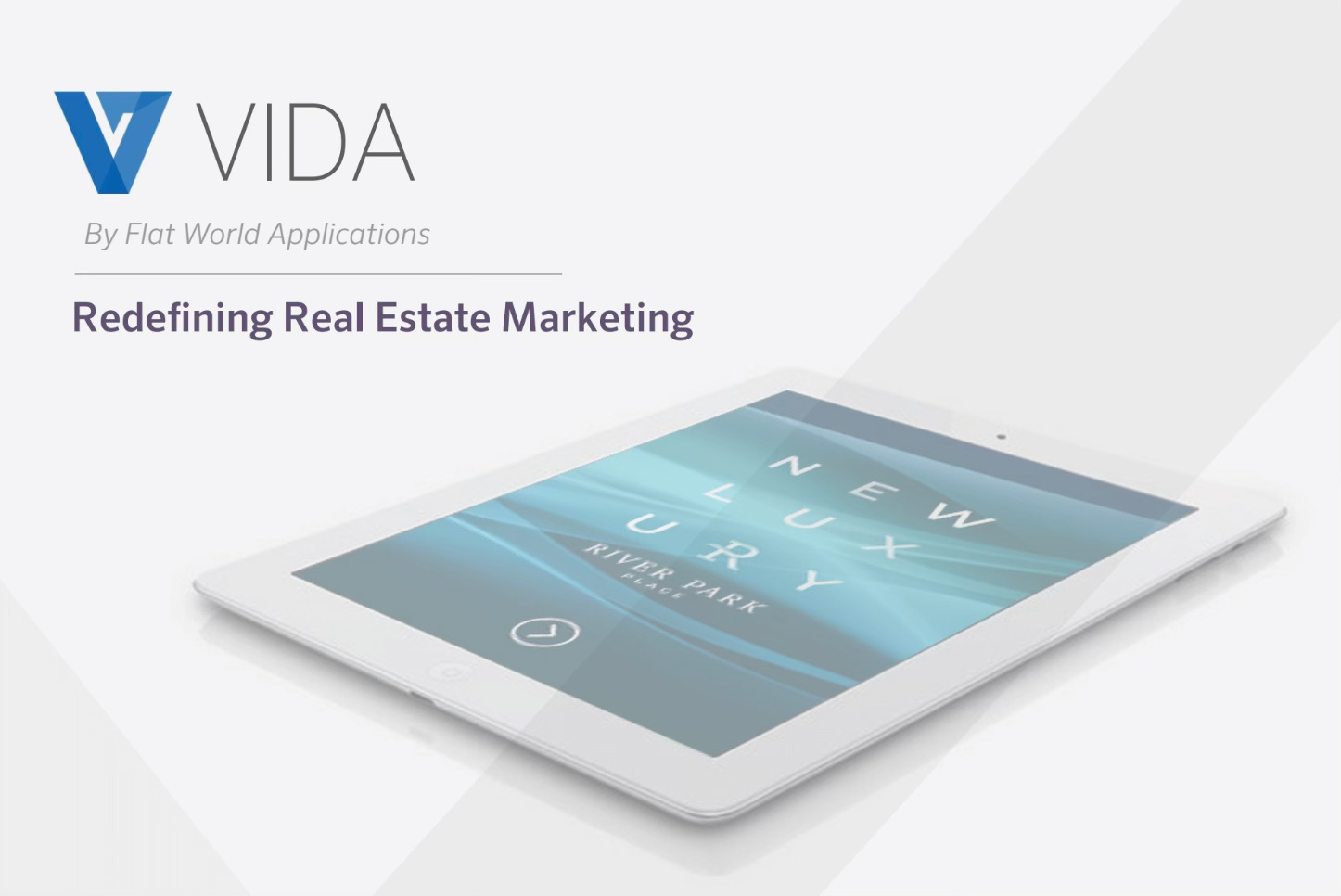
VIDA was intended to be an out-of-the-box product but since we were bootstrapped, we said yes to every customization and soon became a custom apps agency. Anyone who’s run an agency knows you’re either chasing the deal or chasing the invoice. It was exhausting and unscalable. Four years of that, I’d had enough.
The best thing about VIDA was that it got me into real estate tech and eventually led me to New York, where I moved to be closer to the industry. New York is the only city in the world where there’s a real estate gossip magazine and they make reality shows following real estate agents.
Spacio and the New York years 🗽
Rather than selling one off $10k apps that I was begging people to buy as they still wanted their coffee table brochures (the market never flipped), we needed to find a $10 product we could sell to everyone instead.
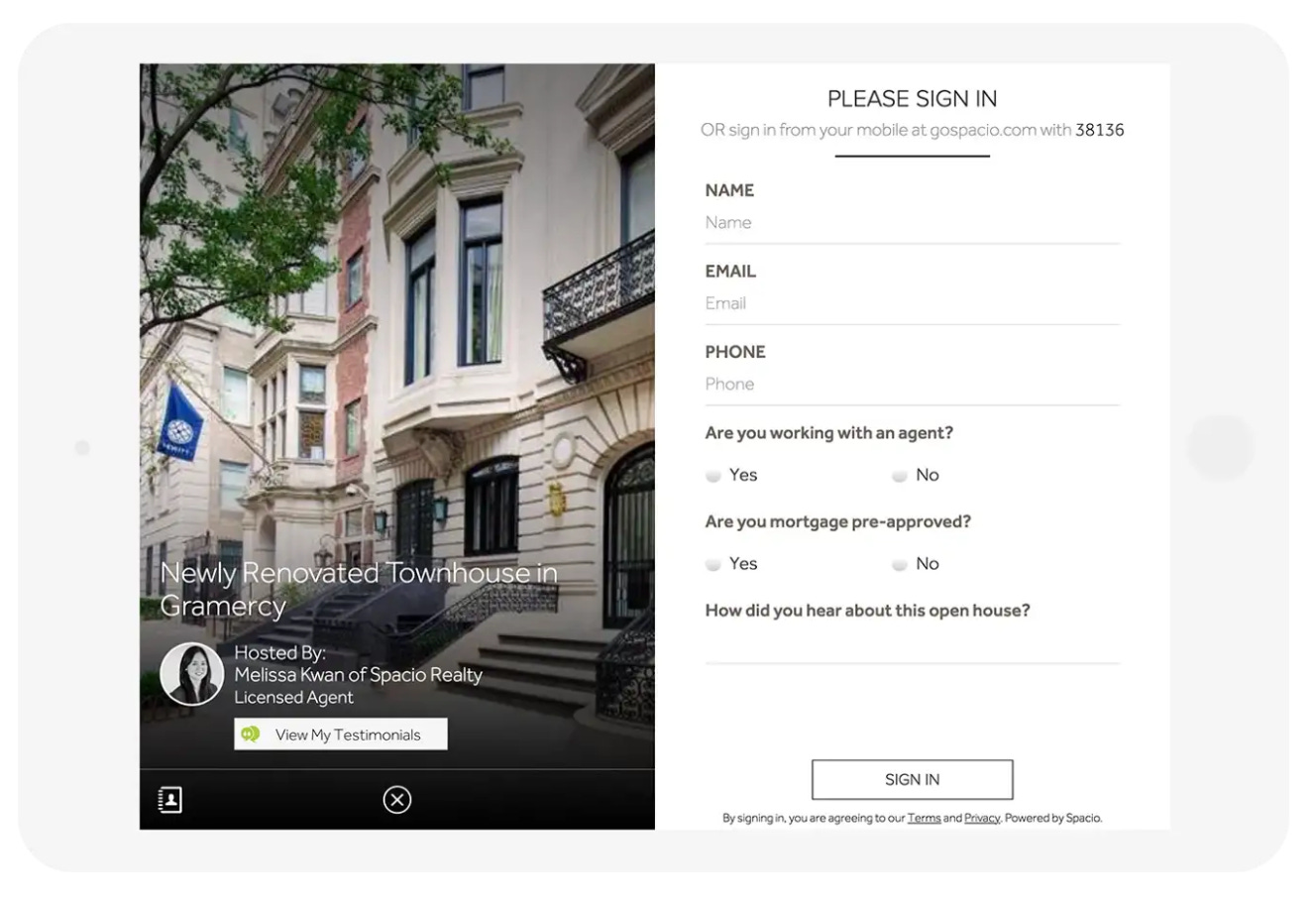
That’s when we came up with the idea of Spacio, open house lead gen software to replace pen-and-paper check-in. To fund Spacio, I took out a loan against the revenue we had at Flat World Apps and burned through it in two years while trying to find product market fit.
Spacio started as a very complicated hardware and software product which was why it took us two years to make our first $10. It wasn’t until we removed 90% of features that real estate agents started to understand what we were doing. That’s when I learned the importance of keeping things super simple, and that innovation is changing the way someone does something forever. Oftentimes, that change is incremental and not bleeding edge.
These were some of the hardest, most trying times of my career and I still have PTSD from living every day with $100 while paying everyone else. Having said that, I was having the time of my life in the best city in the world. New York was where I met my life partner and current cofounder, David; he was my “Airbnb guest” at the coliving house I was managing. (I wrote about the Butterfly Effect of moving to NYC here.)
I did try to raise venture capital, but became profitable instead when VCs wouldn’t fund me. I told the story of how I went from chasing unicorns to bootstrapping here.
If you’d rather listen to the story, this is S1E1 of my podcast, ProfitLed.
A year after we made our first $10 at Spacio, we broke even, and another year after that in 2019, we were acquired by a mid-sized startup, HomeSpotter. Our entire acquisition story is here: Why I didn’t sell our startup to the highest bidder
eWebinar: The lifestyle business 😎
Two months after the acquisition, I started eWebinar to solve the problem that was the bane of my existence at Spacio – doing the same darn training and onboarding webinar over and over again for people who didn’t show up. (See a 1-minute video of what we do on our homepage.)
Because Spacio was bootstrapped, I was everything except for code. I trained users (real estate agents) myself. Without adoption, we wouldn’t get the ongoing subscription. Agents were independent contractors with no-fixed schedules so often, they would sign up for trainings and ghost. Customers would request for more trainings and the same thing would happen. It was soul-crushing. I envisioned a product that would do my job for me while I could do literally anything else.
That’s eWebinar. We save people from what I call webinar hell.
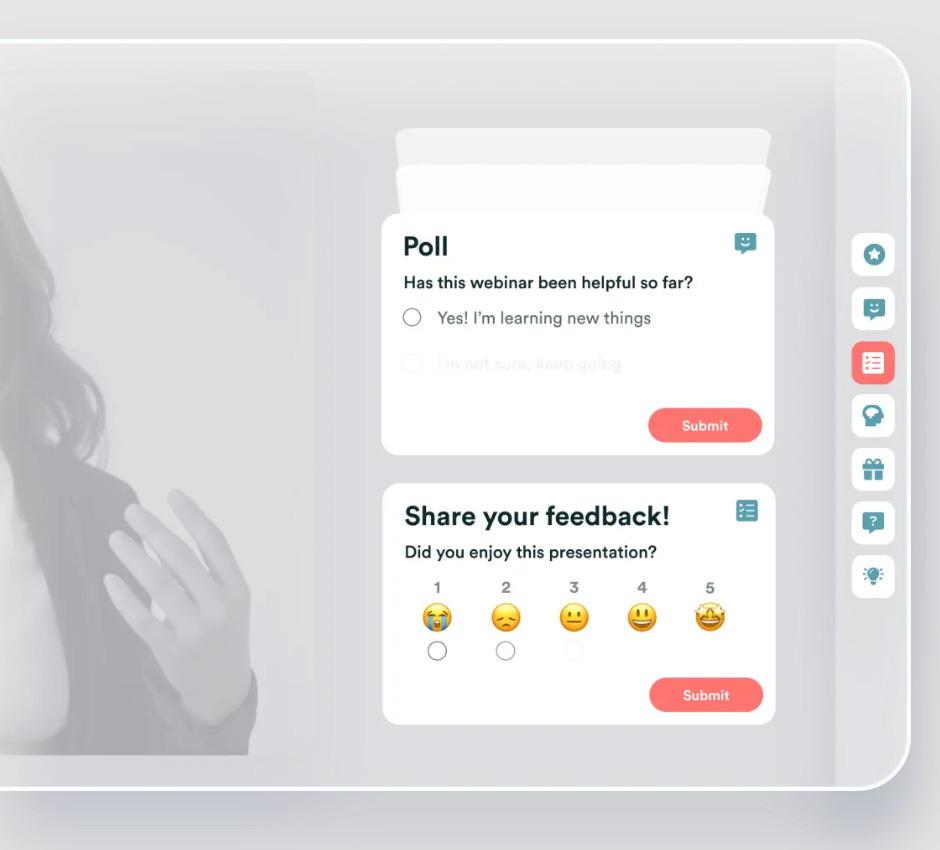
We turn videos into webinars so customer success teams never have to do them live. We layer on interactions like polls, questions, and tips to keep viewers engaged until the end, and an asynchronous chat so they can ask questions and receive responses either in real-time or later via email.
I didn’t sell Spacio for a retirement-level outcome, but it was life changing enough that I could start a new company on my own terms. I wrote about what else I spent my exit on here.
eWebinar was designed to be a lifestyle business that could give myself, my cofounder, and everyone involved a great lifestyle.
This was my first self-serve, product-led company. I wanted something that could be sold 100% over the internet as opposed to Spacio which was sales-led and high-ticket. Little did I know, I had no idea what growing a PLG (product-led growth) company would entail as I’ve been in sales all my life.
A year and a half after launching eWebinar in 2022, I ran out of leads to call and a friend suggested I consider building an audience on LinkedIn for inbound. That’s when I started sharing my bootstrapping journey publicly, and have been doing it ever since. Though, I have recently moved from LinkedIn to Substack. See my Top 10 LinkedIn Viral Posts here.
Slowly but surely, we grew organically and hit $1M ARR in 36 months. We documented the entire process on my podcast, ProfitLed Season Two: Our Journey to $1M. For the first time in my founder journey, 14 years later, I had a business good enough to pay me a real salary.
I should’ve been celebrating…
Instead, a year ago, I hit peak burn out and lost motivation and inspiration to continue building. I didn’t know what was happening at the time, I gave myself permission to take it easy and stopped showing up fully.
The year everything fell apart 😳
I didn’t wake up one day feeling exhausted. Feelings of “not caring” creeped up gradually and built up in a way that I barely noticed. During this time, I told myself whatever narrative I needed to survive; to be okay with where I was.
I told myself that I’d been doing this for so long, maybe I needed a change. That I should sell it for whatever amount I can to live a mediocre lifestyle. I told myself that what I had was enough and anything more would be greedy.
In early 2025, we were spending winter in Mexico as we always do somewhere warm. I found myself waking up unhappy when I was supposed to be living my best life, the life I left my cubicle for.
I resented myself for not being able to get my act together and go back to hustling the way I used to. I felt guilty for not being grateful for the things I had achieved. I was miserable and I couldn’t understand why. I didn’t know how to get out of the place I was in.
I forgot why I was doing this in the first place.
I stopped showing up for myself and everything around me crumbled: my work, my relationship, and my friendships.
The inner work 😓
Through a friend’s recommendation, I attended The Hoffman Process, a 7-day self development retreat last April. It was the best thing I’ve ever done in my life and the beginning of my healing journey, which I wrote about here. A month after that, I attended Rise Higher, another retreat which I wrote about here.
In the last half year, I’ve been actively integrating everything I’ve learned about myself so I can come back with clarity and power. As much as I wanted to rush this process, I realized there’s no such thing as perpetual growth. Sometimes, you need to slow down in one aspect of your life to accelerate in another. Working on myself through those programs was the awakening I needed to take my company and my life to the next level. The previous version of me was severely limited, unknowingly stuck in a prison of her own making until she finally got out.
The last 12 months put me through the wringer. And I’m glad it did.
Reflections 🪞
I thought I was a founder on a startup journey. Turns out, I’m a startup founder on a human journey.
During this period, I was envious of others who had achieved more than me. I was frustrated that I had worked so hard but hadn’t “had my turn” at financial success. Reality is, when I took a step back, I stopped working hard but didn’t change my expectations. I was feeling sorry for myself but wasn’t willing to do what was required to get what I wanted. I know where hard work has gotten me in the past, but my heart just wasn’t in it.
Ironically, I wasn’t working hard because I didn’t think I was worthy of the rewards. I told myself I wasn’t capable enough to build the company I originally envisioned. I shrunk myself because I didn’t believe I was big enough.
People have asked me if I’m ready for success, and I always said, “Of course!” Now I know that wanting success is not the same as being ready for it. Being ready means believing you’re deserving of it.
The biggest lesson I learned through all of this is:
In order to have success the way you want, you have to believe you are good enough to achieve it.
They say business isn’t personal, but for founders, it is personal. All this time I thought I was working on my business, it was a gateway to work on myself. It forced me to confront all my bullshit and turned the chase inward. One of the most interesting observations about this burn out period was seeing how the growth of my company plateaued with my own lack of growth.
While not growing for a year is a death sentence for venture-backed startups, we didn’t have the same stress and urgency because we’re bootstrapped. I’ll never know what it’s like if we raised capital for eWebinar. What I do know is that if we took that route, I wouldn’t be able to take the last year “off” to work on myself. I would’ve either given up, or found someone to replace me because continuing to push just wasn’t possible.
Having full control over our destiny gave me the space to become the person I needed to, to keep doing this.
All of the work I’ve done on myself didn’t change me into someone new. It helped me remember who I was so I could come back to her: the 5-year old in the back of a taxi, staring at a skyscraper telling herself, “I’m going to build one of these.”
Bring it on, 2026. I’m here. 🚀
Thank you for reading!
Till next time,
— Melissa, your founder next door ✌️
What did you think of this article? Let me know!
Stuff mentioned in this article 👇
Article: Why I didn’t sell our startup to the highest bidder
Article: What losing delusional self-belief did to my startup
Enjoyed reading this? Help spread the love 💜
If you enjoyed this piece and found it valuable, please consider sharing it with friends who you think would also benefit from this newsletter.
The only way this grows is by word of mouth, so I’d really appreciate all the help you’re willing to give. 🙏
The line that hit: founder on a human journey. Most “growth” problems are identity problems in disguise 😮💨
I love this piece. "I thought I was a founder on a startup journey. Turns out, I’m a startup founder on a human journey." Entrepreneurship by nature is a lonely journey, and it's also really personal.