

Hi, it’s Melissa, and welcome (back) to “your founder next door“, a weekly publication on the strategies and stories behind building a company without an abundance of resources and friends in high places. No BS, just straight-up truth bombs.
The Big Aha! 💡
This is the story of how I spent five years at my last startup presenting to mostly empty rooms, watching customers I couldn’t reach turn into revenue I couldn’t keep, stuck under a ceiling I couldn’t do anything about. Then I built the fix, and spent six more years looking for the companies living under that same ceiling, only to realize they were in front of me the entire time.
Backstory 👩🏫
For 3 out of 5 years, I ran my last company while traveling full time. I had a startup before that for a few years too, and worked hard to finally get to profitability. I hadn’t traveled much as a kid so being able to work from anywhere was the reward. That was the dream and I was living it.
But I remember landing in Kyoto and the first thing I did was test the wifi in the lobby, because I had a video call at 4am and if the connection wasn’t good enough I’d have to go find a local SIM card or rent a portable hotspot.
I remember sitting at dinner, doing math in my head about whether I could have another drink or not because I had a call in a couple hours and I didn’t want to show up on camera looking flushed in front of customers.
In theory, that was freedom… I guess?
👋 Before we continue - If you enjoy this article, would you please consider restacking it and sharing it with your audience?
This spreads the word and keeps me writing content that will inspire founders to keep doing what they’re doing, knowing they’re not alone.
What my job was 👩🏻💼
My last company was Spacio, an open house sign-in solution we sold to real estate brokerages and franchises. The buyer was the brokerage. The user was the agent.
We were bootstrapped, which meant I was everything except code. Sales, marketing, customer success, accounting, operations, you name it. When a new brokerage came on board, I was the one running the first kickoff, then the ongoing trainings required to get agent adoption. There was nobody else.
The way you drive adoption in that world (probably in most worlds too) is through hosting live sessions. Whatever you want to call it, a webinar, an onboarding call, a training session, it’s the same thing: a live broadcast over GoToWebinar or Zoom or whatever the tool was, presented to whoever signed up and showed up.
It was never just one session per customer. The customer journey started with multiple demos to win over decision makers. A launch session, often called a kickoff when they signed to drive hype within the company. An onboarding session for agents to show them how to get access and start using the basic features. Another one for the agents who missed that. A session for more advanced users. A session for every major feature release. Then the same sequence again and again and again, because in this industry agents are always coming and going, so there’s a fresh group of brand new users every single week who need exactly what the last group got.
That’s why it was never one session per customer. It was a permanent, rolling obligation per customer, that never finishes and gets heavier with every account you win.
Multiply that by 20 customers. Then by 100.
Often the room was small. Sometimes very small. I have done sessions where one person showed up, and then that person dropped off halfway through, and I had to keep going anyway because everyone who registered was expecting that day’s replay recording in their inbox. Which most of them never watched anyway. Our inboxes are replay graveyards. A 45 minute video with 20 minutes of housekeeping and someone else’s questions, with no way to ask your own. Even if you hit play, you’re gone in two minutes.
The lift was the same whether there were a hundred people on the other side or one. Same preparation, same energy, same 45 minutes. Different customers, same content, same jokes, same five questions at the end.
To be clear, the work was never the problem. That was the service we promised. That’s what customers were paying for, and I would’ve done it happily if it worked.
The problem was the return. I’d look at who attended the session, and know I hadn’t made a dent. Everyone who needed to be there wasn’t in the room, and I was going to do the whole thing again next week and get the same result.
The part that wears you down is not the effort. It’s the effort with nothing on the other end of it.
If you look up attendance rates for a live session, most sources will tell you somewhere between 30 and 40%. Having hosted and attended so many of these, I think that number is generous and overreported, but let’s take it at face value.
Now, put real estate agents in the room.
Agents are independent contractors. Nobody tells them where to be. Their daylight hours are sacred and spent on revenue generating activities, which means showing homes, meeting clients, and being at the office. Doing basically anything other than attending a software training their manager told them mattered. That’s not laziness. That’s the nature of their job.
I once launched a brokerage with 6,000 agents. 200 signed up, around 20% showed, and half of those dropped before the end.
That was considered normal.
The real cost of going live 📺
The reach was small. Minuscule. Too small for the cost it takes to produce it.
Ask anyone who runs these regularly and they’ll tell you the same thing. It’s draining in a way that shows up beyond the calendar. You have to be on. You prep beforehand, and not just the material but mentally prepare your mind. Then you decompress afterwards because somehow, it’s always a lot. You can’t go straight from performing and public speaking to anything that requires energy.
A one-hour session ends up taking half a day.
By the way, that’s when it goes well. When something goes wrong, the tech fails or the demo breaks or you lose the room, it takes so much out of you that the day is a wash.
At bigger companies with larger audiences, they assign multiple people to do the job. There’s someone presenting, sometimes two, and another person working the chat so questions get answered while the presenter keeps talking. So that hour costs three half-days, not one. When this amount of investment goes in, the ROI should reflect it, but it seldom does.
The cost of going live isn’t the hour on the call. It’s everything that hour touches.
It’s the day before, when you can’t book anything meaningful because you know you’ve got two sessions and each one needs you present and sharp. It’s the day of, when you come out the other side depleted. Once, I did eight back-to-back sessions while traveling in Paris, saying the same words to a different customer each time, and at the end of that day I had zero energy and zero mindshare for anything else. Not for sales, not for strategy, and definitely not for Paris.
It’s the evening you leave early. My partner got very used to us walking home from dinner at a specific time because I had a call at 11pm, or 3am, or 4am. He got used to me going back to sleep at 5am and surfacing at noon, which meant half the day was gone. I’d built the whole remote work-life intentionally, and then handed control of it to whoever booked time with me.
This is the life I worked for. Why does it feel like I’m always on calls?
The nomading made it louder, but it wasn’t the cause. Anyone who has ever moved a family dinner for a 7pm demo knows exactly what I’m describing. The timezone thing is something many companies deal with if their customers are global, nomad or not.
Somewhere in the middle of that ridiculously packed Paris day, I remember thinking:
This cannot be my life.
I tried to find solutions after that. I went looking for software that could take the repetition off my hands and ended up using what I’d describe as the best of a bad set of options. I never fully solved this problem at that company.
The obvious growth ceiling that’s invisible to most 👻
This growth ceiling has always been very painful and obvious to me, which is why it eventually turned into a company. Low attendance doesn’t stay a low attendance problem. It turns into a revenue problem.
Adoption is the vendor’s job. If a brokerage buys your software and their agents don’t use it, that’s not their failure to attend, it’s your failure to train. You’re the one who gets the call. So you keep running sessions, not because they work, but because running them is how you keep the customer happy and the revenue attached to them.
Customers paid us every month and they saw the same numbers I did. What did they ask for? Another session. And another one. And could we also do one for the new agents joining next month?
Meanwhile, I still had to sell more deals. Because my time was finite, I could only ever prospect the top 200 brokerages out of the roughly 100,000 in the US. Those same 200 got pitched by everyone, all day, every day because the companies targeting them had the same constraints. Therefore, the response rate was low. Which meant the other 99,800 never heard from me. Not because they didn’t deserve to, but because the only way to show them the product was to get them on a call with me, and there was only one of me.
(By the way, forcing buyers on a call was something I never fully understood. As a buyer, I don’t want to get on a call. I want to see the thing and see the price, and if I have questions then I’ll reach out.)
Back then, I tried sending videos instead.
It didn’t work. Not because the videos were bad, but because static video is the wrong medium for this kind of thing. I had no idea if anyone watched it, there was no lead capture or analytics, and there was no way for viewers to ask questions while they were watching, which is the entire point when you’re showing someone a product they’ve never used before.
Training doesn’t work in one pass. You need to hear it, try it, get stuck, ask, and hear it again. Live gives you only one pass, at a time you picked, and then it’s gone.
Sometimes one pass is all you get. That brokerage has other vendors lined up behind you, all competing for the same calendar slots, and the vendor who shows up the most wins. This is why companies end up hiring an army of customer success managers.
💡 Here’s the thing. Doing more of the same live sessions would never have fixed the issues I’m talking about. When you deliver live, you need two sides to show up at the same moment, and you only control one of them. That isn’t a work ethic problem. This is a limitation baked into the live format. You cannot outwork it or outhire it, because there isn’t a number of people you could hire that would put a human in front of every single customer at the exact moment that customer is free.
I could see this clearly because it was limiting my business so much. I couldn’t sell to as many prospects as I wanted to. I couldn’t drive adoption for our product to make it exciting for both sides. The more customers we got, the worse that problem got.
The effort was enormous and the reach was tiny. I knew I was the bottleneck, and I knew that working harder was just going to produce more of the same result. I watched my company sit under a ceiling for five years and the only lever I had was more of me, and there wasn’t more of me.
What’s strange to me is that six years into eWebinar, the company I built to solve all of this, most people still don’t see these limits the way I do.
That’s the most frustrating thing about running this company. The thing we fix is invisible to the people living inside it, which means we’re not selling a better option to somebody weighing options. We’re trying to get somebody to see a ceiling they’ve been standing under for years, and accepted.
Why almost nobody sees it, so nobody fixes it 🙈
Before you can fix something, you have to be able to see it. I’ve met hundreds of people living under this exact ceiling and most of them don’t call it one.
I think it’s a few things stacked on top of each other.
People don’t see revenue not gained as revenue lost. Everyone measures attendance as a percentage of people who registered. 40 of 200 showed, that’s 20%, they talk themselves into believing it’s not terrible. But registration is already the filtered group. It’s the people who believed they could make that Tuesday at 2pm. Everyone who wanted the information and knew they couldn’t be there never registered at all, so they never entered the calculation. In my previous example, out of 6,000 agents, 40 showed up. Those other 5,960 aren’t a loss on anyone’s books. The majority didn’t register and that number didn’t appear anywhere.
When it’s the norm, there’s nothing to fix. If you were hired into a role where this is how the work gets done, by someone who did it that way before you, at a company where every competitor does it that way too, there’s no contrast in your field of vision. There’s no other way to do the thing. When everyone is sick, nobody calls it a disease.
A full calendar looks like the job is going well. If you’re hired to run onboarding, a packed week is evidence you’re doing what you were hired to do. Nobody sends you a report at the end of the month listing the people you didn’t reach. The 40 who showed up are on your calendar. The 5,960 who didn’t aren’t anywhere. Same thing in sales. You’re measured on the five demos you did this week, not the 50 buyers who wanted to see the product and never booked a call.
Doing more of it feels like the fix. When reach is low, the intuitive response is another session. More sessions, more chances to catch people. It works a little, which is the trap. Enough to feel like progress, never enough to close the gap, and every one you add costs you a day you can’t spend on anything else.
Even once you see it, there’s the question of what you’d do instead.
I was on a call recently with a company getting ready to roll a product out to 15,000 customers. They’re going to use eWebinar for it. I asked what they would’ve done if they weren’t referred to us, and the answer was a mix of live Zoom calls, recordings, emails, and eventually maybe a YouTube library.
That’s not a good plan. That’s four partial solutions piled on top of each other, which wouldn’t have delivered content to their customers in a way they would enjoy and interact with. They weren’t being lazy or unimaginative. That genuinely is what’s available when you think the only options are live or a recording.
Meanwhile the gap keeps widening. One of our customers used to run everything live, doing a few webinars per week himself. He told me that since the pandemic he’s watched attendance rates drop as low as 5%. Not 30 or 40%. 5%. Nothing about his sessions got worse. The people on the other end just stopped organizing their week around anybody else’s calendar.
The way you’ve always done something registers as a habit, not as a limit. You don’t experience it as the ceiling, you experience it as the work. And you don’t go looking for a better way until you’ve asked whether one exists, and until the pain of staying where you are exceeds changing.
Maybe I felt it as sharply as I did because I was the founder. Every agent I didn’t reach was adoption I couldn’t drive and revenue I couldn’t keep, and that number had my name on it. Other companies hire somebody for this work, and that person is measured on whether the sessions happened and how they went, not on the people who were never going to be there.
But the ceiling doesn’t care who’s standing under it. Whether it’s your company or your job, whether you’re one person or a team of ten, the reach is capped at the same place, because the cap was never about how hard anyone was working. You can hire more people and run more sessions and you will still only ever reach the ones whose calendars happen to line up with yours.
Most people aren’t in pain about this. They’re just quietly reaching fewer people than they could, and nobody has ever held them accountable for changing the norm.
The world moved on demand and business didn’t get the memo 📺
That customer watching attendance fall to 5% isn’t an outlier, by the way.
The first livestream happened about 30 years ago and it felt like the future, because it was. For the first time, one person could reach thousands of people from their desk.
Then over the last 15 years, everything changed.
Netflix replaced scheduled TV. Spotify replaced waiting for your song to come on the radio. News apps replaced the morning paper. We stopped arranging our lives around somebody else’s broadcast schedule and we have never once looked back. Why would we?
Business is the only place that didn’t get the memo.
We still ask people to show up on a Zoom at 2pm on a Tuesday to hear something one person could have recorded once and delivered perfectly, every time.
Your customers already decided how they want to receive things. On their own time, when they’re ready, the way they do with everything else in their lives. Your demos, your onboarding and your training are the last things in their week still asking them to be somewhere at a fixed hour.
Starting eWebinar after daydreaming for five years 🕰️
None of this was as clear to me back then as it is now. I didn’t have the reasoning and full picture, I just had the problem, and a wish.
For five years at my last startup, I daydreamed about a product that would do that job for me.
Not a static video recording. Something closer to a clone of a live session, but better. My best version of that session, running whenever somebody wanted it. No connection problems, no interruptions, no version of me that’s tired because it’s the eighth one that day. The same quality at 11pm on a Sunday as at 10am on a Tuesday.
The part everyone assumes you give up is the part that mattered most to me. People need to be able to ask questions, so it has to have a chat system that works whether or not I’m sitting there. Real time response if I’m around, by email if I’m not, the way a chat bubble works on any website.
What I wanted was an on-demand video software with chat and interactions like polls, questions, CTAs built in to keep people engaged until the very end. Nobody had built this product the way I had envisioned.
Put yourself on the receiving end for a second. Would you rather block out a Tuesday afternoon, or watch it at the moment you need it and ask your question right there? That isn’t a hypothetical anymore. On-demand sessions on eWebinar average 83% attendance. Live sits between 30 and 40% on a good day.
Back then, there were products that were close. There’s a whole category of webinar automation solutions out there, and a lot of it was built by internet marketers for internet marketers, with fake attendee counters and fake chat to create fake scarcity, all engineered to trick consumers into thinking the session was happening live so they’d buy something. I didn’t want to be anywhere near that practice, and I still don’t. Other solutions were live-first tools where automation was a bolted on feature, so you could upload a recording and there’d be a chat box, but unless you happened to be sitting there while it played, nothing you typed went anywhere.
Then Spacio was acquired. Two months later I asked myself a question:
How would I feel if someone else built this tomorrow, exactly the way I’ve been imagining it for five years, and it wasn’t me?
That would really suck.
I incorporated the next day and started mapping the product out on paper for the first time.
How we got it off the ground, and how it grew until it didn’t 🚀
Before I started, I wrote down ten non-negotiables for the new company. I wrote about that list in: The only way to live the life you want is to design it. I wanted something that was industry, language, and geography-agnostic.
So I set out to build a general tool that can be used by all types of businesses serving all types of customers. A way to deliver repetitive video to anyone, in any industry, anywhere in the world.
To get the first 100 customers, I made a list of every single person I knew who might need this.
To start, a lot of them were proptech vendors and brokerages, because I spent 10 years in the real estate industry. They were my previous customers, partners and friends.
I personally onboarded our first 100 customers. After that, eWebinar grew on its own, through customers referring customers, content, and people finding us and signing up without ever talking to me, which was the entire point.
Six years later, growth has been flat for about two of them.
What I saw when I dug into the business 🔍
To get back to growth mode, I pulled our top accounts to see who they are and where I should be spending my time.
I wasn’t sure what I’d find, but what I found was comical…
I had spent so long in proptech, by the time Spacio was acquired, I was done with it. I wanted to learn something new, meet different people, and build something that wasn’t tied to one regional industry, because that’s what real estate is. The transaction values are big but the market is regional. A product built for the US and Canada won’t work in the UK.
The agnostic non-negotiables weren’t a strategy. They were an escape plan.
I saw that 75% of our best accounts are in real estate: proptech, MLSs, brokerages.
Ten years in the industry, an exit, a list of non-negotiables written specifically to get me out, and a product I built to be industry-agnostic. And I’m back in it.
Once I thought about it, it was obvious. I designed this product for one specific person: me. Someone trying to train and demo to people who don’t have a fixed schedule and don’t know where they’ll be in two hours. Every feature was designed for that person, because I was that person for years. Real estate was the blueprint.
Here are our top industries, and what they use eWebinar for:
Professional services. Consultancies, agencies, law firms. Marketing and lead generation.
E-learning and education. Course creators and educators. Thought leadership, marketing, lead generation.
Real estate. Proptech, MLSs, brokerages. Sales demos, onboarding, training, recruiting.
Financial services. Insurance and personal finance. Marketing and lead generation, onboarding and training.
Healthcare. Hardware, software, non-profits. Onboarding and training, sales and marketing.
Who’s on the receiving end in every one of those?
Real estate agents, insurance agents, financial advisors, doctors and nurses and dentists, lawyers, students.
Not one of those people works 9 to 5.
They’re independent contractors, business owners, and commission earners. They set their own schedule, and usually that’s why they took the job. Almost none of them are paid to show up, they’re paid for what they produce, so every hour has a price attached to it. People who want somebody else deciding their week don’t choose that trade. They chose it precisely because nobody gets to tell them where to be.
In the last six years of building this company, I assumed everyone felt this ceiling the way I did. But they don’t. Everyone who does live sessions experiences a version of it, because it’s baked into the format, but the intensity varies depending on who you’re trying to reach.
If your audience sits at a desk from 9 to 5, and attending is part of their job, the ceiling is there but it’s low-grade. You get decent attendance. You can schedule a session and expect people at work hours. It’s a limit, but it doesn’t hurt.
If your audience is independent contractors and business owners who don’t know where they’ll be in two hours, it’s a different experience entirely. You can do everything right and still present to an empty room, over and over.
Same limit. A completely different amount of pain.
There’s a second thing stacked on top of that, and it’s the one that hurts the most.
When you’re training employees, attention is expected. The training happens and people need to be there.
When you’re trying to reach independent contractors, their attention is the revenue. If agents don’t turn up and don’t learn the product, they don’t use it. If they don’t use it, the brokerage doesn’t renew. There’s a straight line from the empty seat to the cancelled contract.
That’s why I ran the same session over and over knowing it wasn’t working. Not because someone made me. Because the alternative was doing nothing while accounts drifted away.
These industries are full of complex products, regulation, and compliance. The information keeps changing, so the training never ends. It’s a hamster wheel by design.
The pain is what makes somebody go looking for something else. That’s why these are the top five industries for us. The product works better for them because a missed session is money.
Here’s what it looks like when the ceiling comes off.
Our customer, Inside Real Estate, has 50 eWebinars running concurrently, every single day, with two people answering questions in chat as they come in, in real time or by email. That’s hundreds of hours of content delivered per month. There is no version of a calendar where two people can deliver that live.
Proposify uses eWebinar as the destination for their LinkedIn ads, so a prospect can see the product without booking a call, and to train their 20,000 users.
Cloze delivers training, feature rollouts, and demos to customers in more than 70 countries, 24/7.
💡 Here’s the irony: I conceptualized every feature of this product while I was selling to real estate agents. The chat that works whether or not I’m there. The ability to watch at 11pm on a Sunday. The analytics that tell me who showed up. Every one of those decisions was made for that exact audience, because I was the one being crushed by them.
I built it for me. Then I spent six years trying to not sell it to people like me because I wanted to experience another type of business.
That’s where my head is right now. Figuring out how to get in front of more of these companies, the ones training and selling to people who don’t work 9 to 5, because they’re the ones who feel the problem we’re solving the most, and they’re the ones we’re built for.
What my travels look like now 🛫
By the way, this is what my trips look like these days.
Between March and August this year we delivered 505 hours of demos to 1,065 prospects, all of them watching whenever they wanted. I didn’t do a single one live. We don’t have a salesperson. It’s me and the product, and nothing I could say on a call demos this thing better than the thing demoing itself.
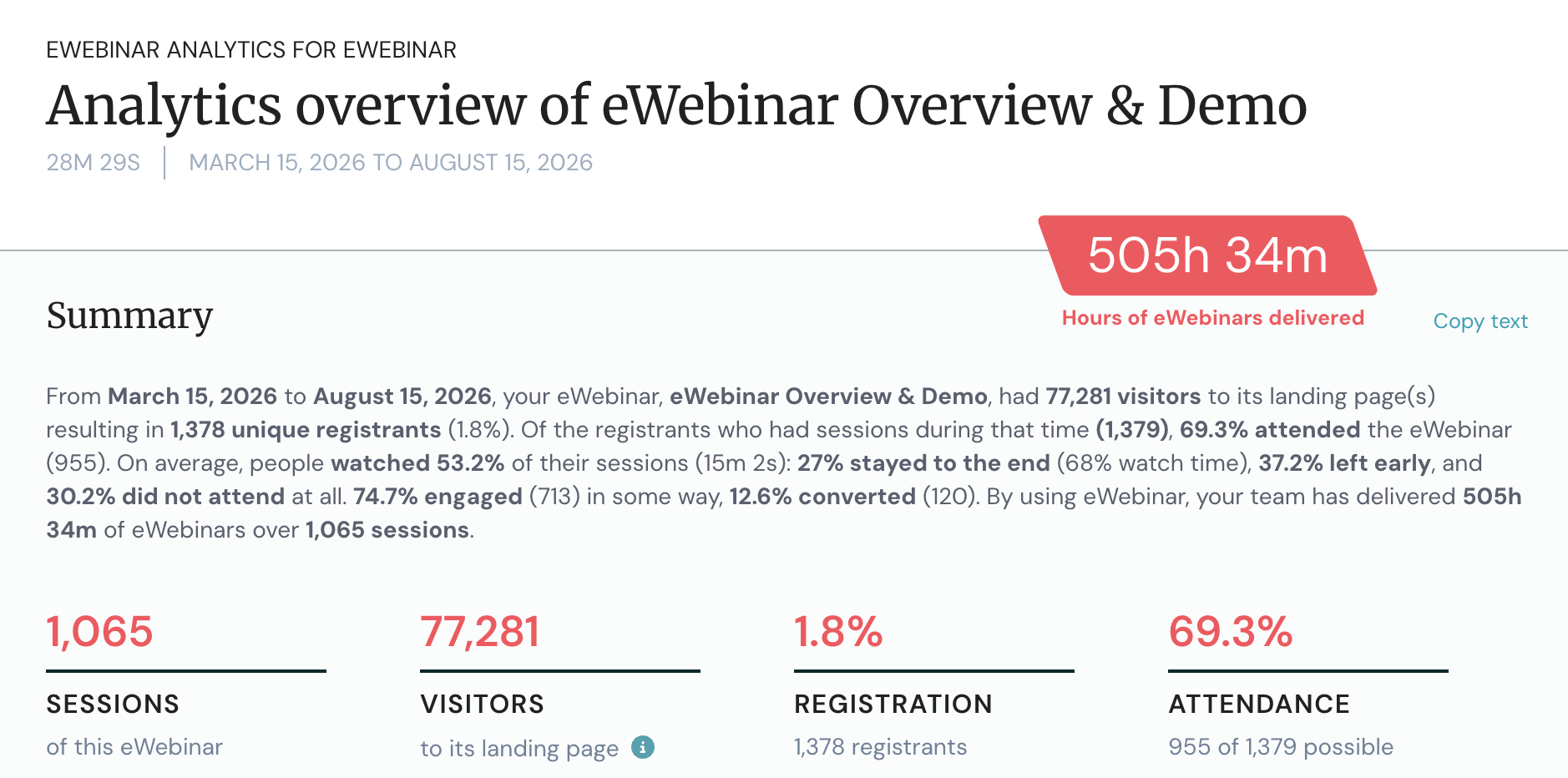
I still get on calls, but only the ones worth having, and the person has almost always been through our on-demand demo first. We spend the hour on their situation instead of me repeating the 30 minutes they could have watched at their own time.
Nobody tests hotel wifi anymore. If I’m in Kyoto, I’m enjoying where I am.
The biggest lesson I learned through all of this is:
Delivering the same thing live, over and over, doesn’t just cost you your calendar. It costs your business the reach, it costs you your life outside of work, and it costs your customers the thing they wanted to see. Everyone loses.
Reflections 🪞
People told me for years that the riches are in the niches. I didn’t want to hear it. We were bootstrapped, we needed revenue, and picking one industry felt like turning money away. More than that, I didn’t want the niche to be real estate. I already did my time.
What I understand now is that the niche was never an industry.
The niche is companies whose job is to reach people who don’t sit at a desk waiting to be reached. People with their own schedules, their own priorities, and no obligation to show up for you at a fixed time, on a fixed date.
That’s real estate, and it’s also insurance, healthcare, education, legal, every consultancy trying to fill a room.
For the past five months we’ve rebuilt the entire company around that understanding. Every page of the website and every piece of positioning. I’ll write about how we did that separately. The methodology deserves its own piece.
Connecting with people live is a beautiful thing. I’m not against it. The whole reason it’s worth protecting is that there’s only so much time we can devote to it.
Live isn’t the problem. Spending it on things that didn’t need to be live is.
If this sounded like your week 👋
If you sell, train, or deliver information by video or livestream to people who don’t work 9 to 5, leave a comment here or DM me. I’d love to hear how you’re doing it today.
If you want to see how eWebinar can help, here it is in one minute:
Till next time,
— Melissa, your founder next door ✌️
What did you think of this article? Let me know!
Season 3 of my podcast, ProfitLed, is now live.
We’re exploring the intersection of Passion, Profit, and Purpose, and how those shifts as founders come into financial success. Guests include Chris Walker, Adam Robinson, and Esben Friis-Jensen. Find it on: Apple, Spotify, YouTube
👋 If you enjoyed this read, would you please consider restacking it and sharing it with your audience?
This spreads the word and keeps me writing content that will inspire founders to keep doing what they’re doing, knowing they’re not alone.
Thank you 💜 The only way this grows is by word of mouth, so I’d really appreciate all the help you’re willing to give.