

Hi, it’s Melissa, and welcome (back) to “your founder next door”, a weekly publication with stories and tidbits of my human journey bootstrapping eWebinar to $5m ARR. No BS, just straight-up truth bombs on what it’s like to build a company without an abundance of resources or friends in high places.
What got me thinking this month
A question keeps swimming around in my mind that I can’t seem to shake: Am I on the right path?
Are we going after the right customers? The right channels? Is our strategy the right one?
eWebinar has enough customers and revenue for me to believe we’re onto something. But we’re not growing fast enough for me to know for sure. This in-between place is a hard place to be.
I felt this exact same way with Spacio, my last startup. The difference is, that company had a ceiling. The product was too niche, too geographically limited, too small of a total addressable market. It was the reason I sold it.
I never thought I’d end back up in a blue ocean market. I actively tried to avoid it. And yet here I am, explaining to people what an “automated webinar” is every day, when almost every person on earth has had a Zoom account since 2020 and has sat through at least one webinar in their life. That part still baffles me.
I’m questioning our opportunity cost. Is our time best spent here? Or can we create more impact somewhere else, especially when the world is moving at AI-powered speed and everything feels like it’s accelerating except for us?
I read a post recently by Marc Randolph, cofounder of Netflix, called “The Myth of Never Giving Up.” He brings up the question that haunts every founder: when something isn’t working, does it mean stop, or does it mean you just haven’t found the unlock yet? His litmus test is whether you’re still enthusiastic, still learning, and making progress.
This reminds me of something that happened some years ago at Spacio. We’d been grinding for years without clear signs of success. My cofounder came to me one day and asked if it’d be okay for him to explore other opportunities. I didn’t want to hold him back, but I knew if he left, it was over.
So I asked him, “How would you feel if we shut it down tomorrow?”
He said, “I guess I’d always wonder if there was more we could have done.”
There was nothing at that point showing us we were going to succeed. All the signs pointed at failure. The only thing that kept us going was the possibility of regret.
Two years after that conversation, we were acquired.
Contrary to Marc’s test, mine is asking the question: How would I feel if I gave up now?
If the answer is that I’d always wonder if there was another door we hadn’t tried, I keep going.
It’s not reasonable, but neither is building a startup.
As Steve Jobs famously said, “You can’t connect the dots looking forward; you can only connect them looking backwards. So you have to trust that the dots will somehow connect in your future.”
Maybe I just need more patience. And a little more gratefulness for what’s in front of me.
I guess we’ll find out.
Quick tidbits
Some battle scars shared here.
Marc Randolph’s article on The Myth of Never Giving Up. Marc is the cofounder and first CEO of Netflix.

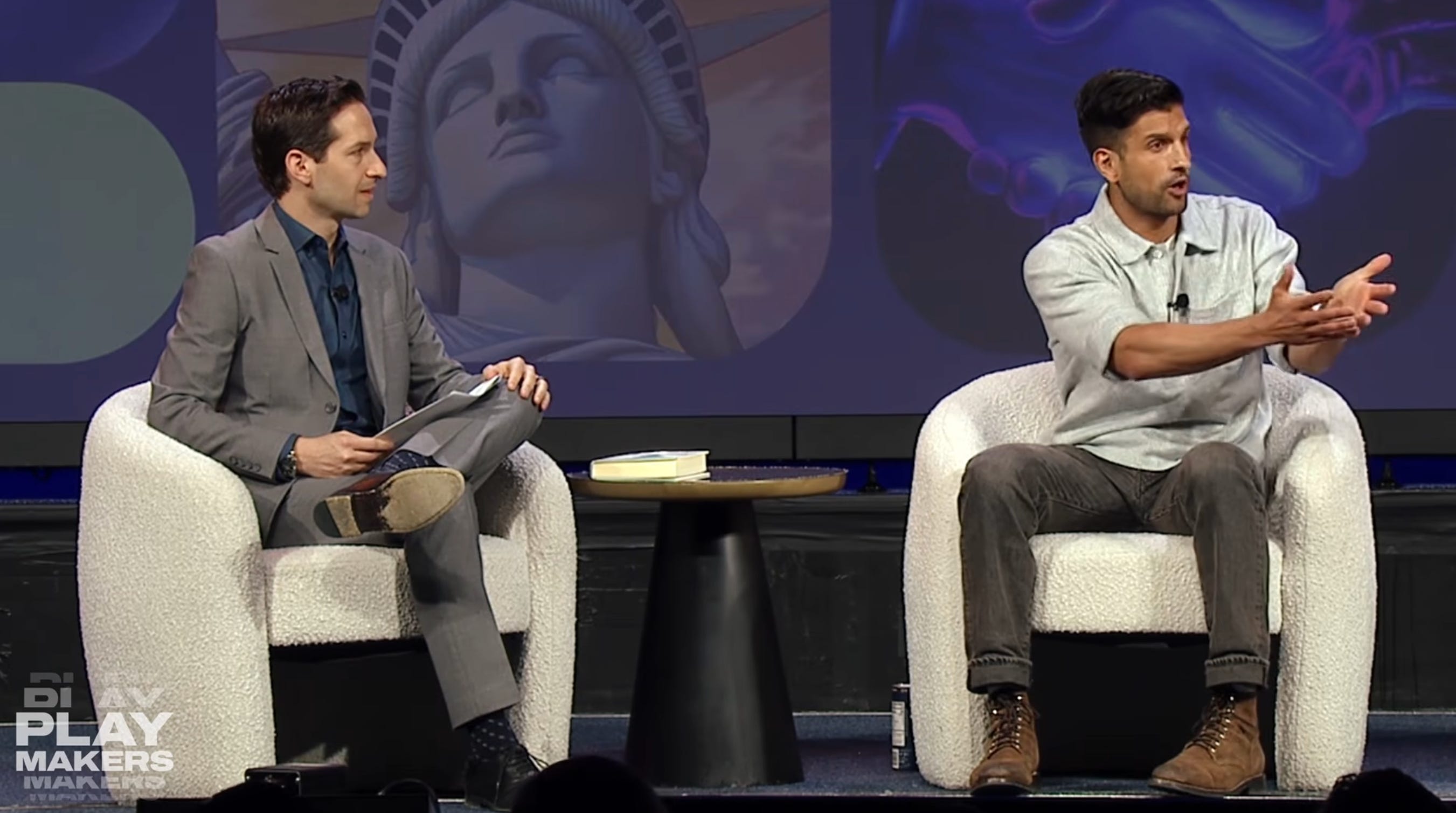
Andrew Flachner, CEO of RealScout and Host of Playmakers Podcast interviewed Sahil Bloom on The New Rules of Wealth. This interview was based on Sahil’s book, The 5 Types of Wealth. Andrew is a close friend and one of the savviest, most tenacious entrepreneurs I know. One day, I’ll tell you about him.
This month’s articles you may have missed
Bootstrapped 13 years to exit: A true founder story: Why a “boring” founder exit is the extraordinary outcome most of us should be chasing.
Equity is like toothpaste: A stranger asked for equity in my startup after a one hour meeting.
You can’t vibe code a business: A product is not a business.
The journey founders forget they’re on: This is it. Nothing happens next. Don’t miss it.
Till next time,
— Melissa ✌️
👋 If you enjoyed this read, would you please consider restacking it and sharing it with your audience?
This spreads the word and keeps me writing content that will inspire founders to keep doing what they’re doing, knowing they’re not alone.