


Hi, it’s Melissa, and welcome (back) to “your founder next door”, a weekly publication with stories and tidbits of my human journey bootstrapping eWebinar to $5m ARR. No BS, just straight-up truth bombs on what it’s like to build a company without an abundance of resources or friends in high places.
The Big Aha! 💡
Most founders want an exit, but few think about how to build a buyable business every single day. I didn’t build my company to sell, but when I wanted out, I had that option because we had built a buyable business. These are the 7 things that made it possible.
Backstory 👩🏫
Previously, I wrote about why I didn’t sell Spacio (my last startup) to the highest bidder, and what our entire acquisition process looked like from offer to close. I wanted to give you a glimpse of what actually happens when someone buys your company.
I wasn’t building that company to sell. When I founded Spacio, the idea of an exit didn’t cross my mind. My main goal was to build a business so I wouldn’t have to work for anyone else. I wanted freedom. The freedom to wake up without an alarm clock and dictate my own schedule.
Somewhere along the way, the business I built to free me started to trap me instead. My heart wasn’t in it anymore, and I wanted an out.
Most founders don’t get the choice to leave. Either because their business isn’t attractive enough to sell, or because they’ve raised venture capital and can’t sell without their investors’ approval at a certain multiple. Finding a buyer for any company at any stage is not an easy task.
I got lucky.
We always ran Spacio as if it’d be sold one day, even when selling wasn’t the plan. We kept things clean, built the right relationships, and made strategic decisions that gave us options.
When I needed that option most, it was there.
These are the 7 things we did that made our business buyable…
1. Documented everything properly, always
I’m one of those people who believe your external world is a reflection of your internal world, vice versa. So I always made it a point to keep everything as organized and clean as possible. Whether it be my home, my storage closet, or my Google Drive. All of it.
Digital hygiene is key to a quick and smooth due diligence process, as I wrote about here.
Since my first startup (I’m on my third now with eWebinar, Spacio was my second), I’ve spent money most new founders wouldn’t have to retain top startup lawyers. Contracts are never a problem until they are. Not having experts handle incorporation, shareholder agreements, employee and customer contracts... it’s just not worth the risk. Good lawyers are the muscles behind every deal, and you’ll be glad you spent money to do things right early on.
Maintaining digital hygiene goes beyond saving digital copies of documents in a folder. We made sure all files lived in their rightful place, named appropriately, with dates to avoid version control nightmares. For example, “hubspot-crm-exports-real-estate-co-2025-12-05” would get renamed to “HubSpot CRM Export - Dec 5, 2025”.
There were no duplicate files. Not even two of the same logo saved in different places. Nothing was ever deleted, only moved to “archive folders” to keep main folders tidy.
Our CRM was the same, always up to date with notes on all accounts, and no duplicates. When an acquirer asks about your current and future revenue opportunities, the easiest thing to do is to export from your CRM which could take a few seconds if it’s current, or a few painful days if it’s not.
Lastly, our accounting, financials, and taxes were kept up to date by trustworthy, digital-first accountants. In my first company, we worked with an old school accounting firm where nothing was app-based. Taking photos of receipts and downloading invoices to submit them once a year was a mess, prone to errors, and financials weren’t updated monthly. With Spacio, that was one of the first things I upgraded. I also kept financial projections 2 years out, updating them every month to keep them as close to reality as possible. (You can check out my SaaS Financial Projections Template here.)
👋 Before we continue - If you enjoy this article, would you please consider restacking it and sharing it with your audience?
This spreads the word and keeps me writing content that will inspire founders to keep doing what they’re doing, knowing they’re not alone.
2. Built our brand on integrity 💪
Someone once told me in my early 20s, “it takes years to build a reputation, but only seconds to destroy it.” That was one of the first quotes that stuck with me
We were small and bootstrapped, selling our product to much larger companies. We didn’t have much to compete on, so we made integrity our greatest currency.
Integrity wasn’t just the way we treated our customers and each other. It was the foundation our culture of excellence was built on. Integrity was the love we put into every detailed feature in our product. Integrity was being responsive when there was a critical issue after hours. It was going the extra mile for customers without sacrificing our values.
We made sure our customers’ reputation would only be enhanced by choosing us.
Integrity meant laser focus execution and follow through. It meant delivering exactly what we said we would, when we would, and taking accountability when we fell short. We did the right thing even when it was harder, and we always chose the most virtuous path forward, no question.
Our reputation in the real estate industry was strong. Nobody had anything negative to say about our company and the people involved.
They don’t have to like you, but they will respect you.
3. Made friends with everyone 😎
Proptech (property/real estate tech) is probably the biggest and smallest industry out there. People think it’s huge because transaction volume is high, but the number of companies serving that space, especially the ones that make it, is small. Which means a tight knit group of people could help your business by giving you insights and making introductions.
Most deals are done at in-person events, so in my past life, I was always at conferences lobby-conning (sneaking into a conference to avoid paying for a ticket). Over time, I made friends with everyone. I became known as the hustling bootstrapper, so people were always ready and willing to help.
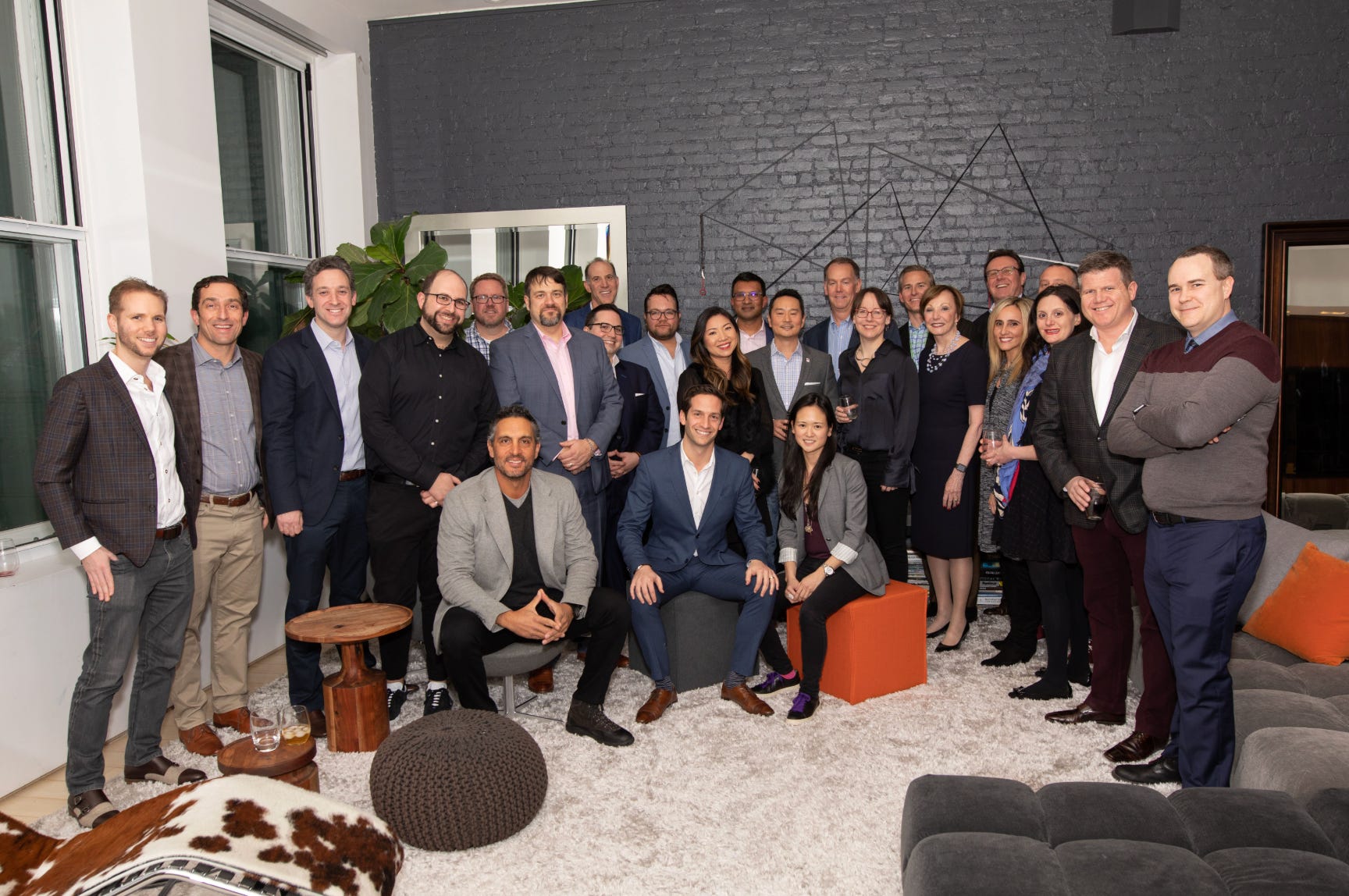
I was generous with my time and network, and made meaningful connections whenever I could without being asked. I started hosting “real estate leadership dinners” and positioned myself as the person who threw the most highly coveted dinner of the year.
That event series started when I invited the CEO of Zillow to my house for dinner, then used his name to fill the rest of the seats at my table. It was the greatest hustle story of my career.
I didn’t build my social circle strategically for a future sale. I genuinely enjoyed it and my friends kept me sane during all those soul-sucking conferences. But a byproduct of having this business community was that it elevated our brand and credibility, which made us more attractive in front of our acquirer.
When we sold, we didn’t have a lot of customers (less than 100 companies), but we had a solid customer base with some brand name logos that our acquirer could upsell to and add to their portfolio. Their products were at a much higher price point than ours so this was compelling for them.
4. Delivered an impeccable product 🌟
I know saying that we delivered an impeccable product sounds cliche, but it wasn’t easy. Our product wasn’t simply beautiful. It was beautifully simple.
Many companies can do good work, but few are willing to push through the last 2% to make it great. It’s too much effort, too time consuming, too little ROI. It doesn’t always make financial sense.
My team used to joke that I was obsessed with getting things “one pixel to the right.” We obsessed over every little detail. Nothing went out unless it was perfect. We never released anything we weren’t proud of.
Great work is exceptional. It can’t always be explained, but it can always be felt. It becomes ingrained in your culture. It’s not just in the product, it’s how you behave and how you make decisions. It is what trust, credibility, and reputation are built on.
Great work is the love that can’t be replicated. It’s the thing that makes you unique. It’s what companies want to buy.
5. Profitable and profit-led 💰
Some of my darkest entrepreneur moments were during my time with Spacio. I’ve shared extensively about how it took 2.5 years of product iterations before we made our first $10. As a result of that, I got into an incredible amount of debt. I only ever paid myself enough to cover basic expenses, and we made ends meet by taking side projects like building apps and websites for other companies.
The best thing that came out of that period was I got extremely good at bootstrapping; being revenue focused while optimizing burn. We were creative about getting things done for very little, designing product features that delivered concrete business value, and hustling our way to revenue. Everyone on the team did more than one thing. We were all jacks-of-all-trades in our domain.
We were so hyper focused on revenue that we made decisions by asking ourselves, “Will doing this help close another deal?” If the answer was no, we’d table it.
There are only two ways to profitability: increase revenue and lower costs. It’s not enough to just focus on increasing revenue if your burn goes up with it. We were always profit-led because we had no choice.
At my peak, I was in $250k of personal debt and all credit cards maxed out. I had no idea how I was going to dig myself out. It was one of the things that kept me going because it wasn’t an amount I could pay back by quitting and getting a job. All of that was only paid back when my startup was acquired.
While it took a long time to find our first customer, it only took another year to break even because we were selling enterprise SaaS and contract values were between $10k to $120k.
We were a Canadian company, which made bootstrapping possible. Salaries were 50-100% lower than the US, and our acquirer (a US company) saw this as an advantage.
Bootstrapping a company in the US for our business wouldn’t have been possible. If we weren’t hiring in Canada, we would’ve had to outsource to other countries, which is what we did with eWebinar.
By the time we started acquisition talks, we were running efficiently with low burn, so our buyer was going to inherit a profitable company. They only had to increase our pay to market salaries, which our revenue was able to cover. The only reason we didn’t pay market salaries prior was because we needed some cushion in our bank account, but we paid more when we could as we closed more deals.
6. Realistic about industry multiples 👩🏫
A customer once asked me how much I would sell my company for. I told him I didn’t know.
He said, “You always need to know what your number is. If someone makes an offer, you can only respond quickly if you know your number. You don’t always have time to think.” He told me that every week, he looks at his business and he comes up with his number.
That conversation made me pay attention to what companies in my industry were getting acquired for.
10x gross revenue (for SaaS) is what most people think they can sell for. Realistically, depending on your revenue and growth rate, it’ll most likely be 3-5x if you’re pretty good and 6-8x if you’re great. The 10-20x multiple that we read about are the exceptions, not the rule, for strategic acquisitions.
Multiples in the real estate industry (at least in the US) have always been lower than typical SaaS. It’s a function of the industry having limited players, and limited companies that make acquisitions.
I was realistic about where Spacio could land. It was common knowledge that in the industry, a below average company would sell for 1-1.5x. An average to good company would sell for 2-5x. Only exceptional companies could get 6x and over. There were very, very few of those in the history of proptech.
I wrote about how I didn’t negotiate the offer when it was made because I knew the acquiring CEO to be just and fair. That aside, it was an immediate yes because the number was in a good range. Not trying to extract the highest dollar and push for more than what we were worth made the conversation stress free.
7. Didn’t raise venture capital 🚫🦄
The only reason we were able to sell Spacio was because we didn’t raise venture capital. There were only 4 parties on our cap table: Myself, my cofounder, my uncle who wrote me a $70k check to get us started, and one company we traded work for equity with. I was the company’s only director and we didn’t need board approval to sell like a VC-backed company would.
Because we didn’t have to return investors’ money, we didn’t need a lot for my cofounder and I to have life-changing outcomes. Which also meant the acquiring company didn’t need significant cash on hand, and that made the transaction possible.
Being bootstrapped was our saving grace because my business became my burden. I was ready to move on. I can’t even imagine being forced to stay when my heart wasn’t in it anymore because an investor said so, and not having the capital to try my hand at something else with higher potential.
Two months after Spacio was acquired, I started eWebinar to solve the biggest pain I lived with while growing that company: doing the same training and onboarding webinar over and over again.
Five years later, I’m finally living the life I dreamt about when I left my cubicle 15 years ago at SAP. All because I bootstrapped that company.
💌 PS. Why did I bootstrap? Read my story on How I went from chasing unicorns to bootstrapping.
Reflections 🪞
They say businesses are bought, not sold.
You want to be in a place where if you’re being evaluated alongside multiple companies, your business is the most attractive and makes the most financial sense.
A good business will always be good, even in a downturn.
Don’t forget: Time kills deals!
When you get an offer, you want to move fast. Having your ducks in a row means you can get through due diligence quickly, reducing the risk of things falling apart.
The biggest lesson I learned through all of this is:
Always run your business as if you’ll get an offer tomorrow.
You never know.
Thank you for reading!
— Melissa ✌️
Stuff mentioned in this article 👇
Article: Why I didn’t sell our startup to the highest bidder
LinkedIn: How we win using integrity as our greatest currency
LinkedIn: The greatest hustle story of my career when I invited Zillow’s CEO to my house for dinner
Enjoyed reading this? Help spread the love 💜
If you enjoyed this piece and found it valuable, please consider sharing it with friends who you think would also benefit from this newsletter. They can also sign up at melissakwan.com.
The only way this grows is by word of mouth, so I’d really appreciate all the help you’re willing to give. 🙏
Find me here too 🔍
eWebinar - Pre-recorded webinars with chat
ProfitLed Podcast, eWebinar’s Journey to $1M ARR
Newsletters I enjoy 🗞️
Dr. Julie Gurner: Ultra Successful - Executive performance coach sharing sightful, easy to digest advice & executable strategies that makes you think.
Kyle Poyar: Growth Unhinged - In-depth case studies and deep dives on pricing & packaging, go-to-market strategy, SaaS metrics, and product-led growth.
Tom Orbach: Marketing Ideas - Battle-tested, practical and unconventional marketing ideas every Thursday.
Loved this, and my product sub-Mantra has always been TWO PIXELS TO THE LEFT! I guess that makes you twice as granular as me!
Good story, and good principles to work by if you'd like to be acquired someday.